
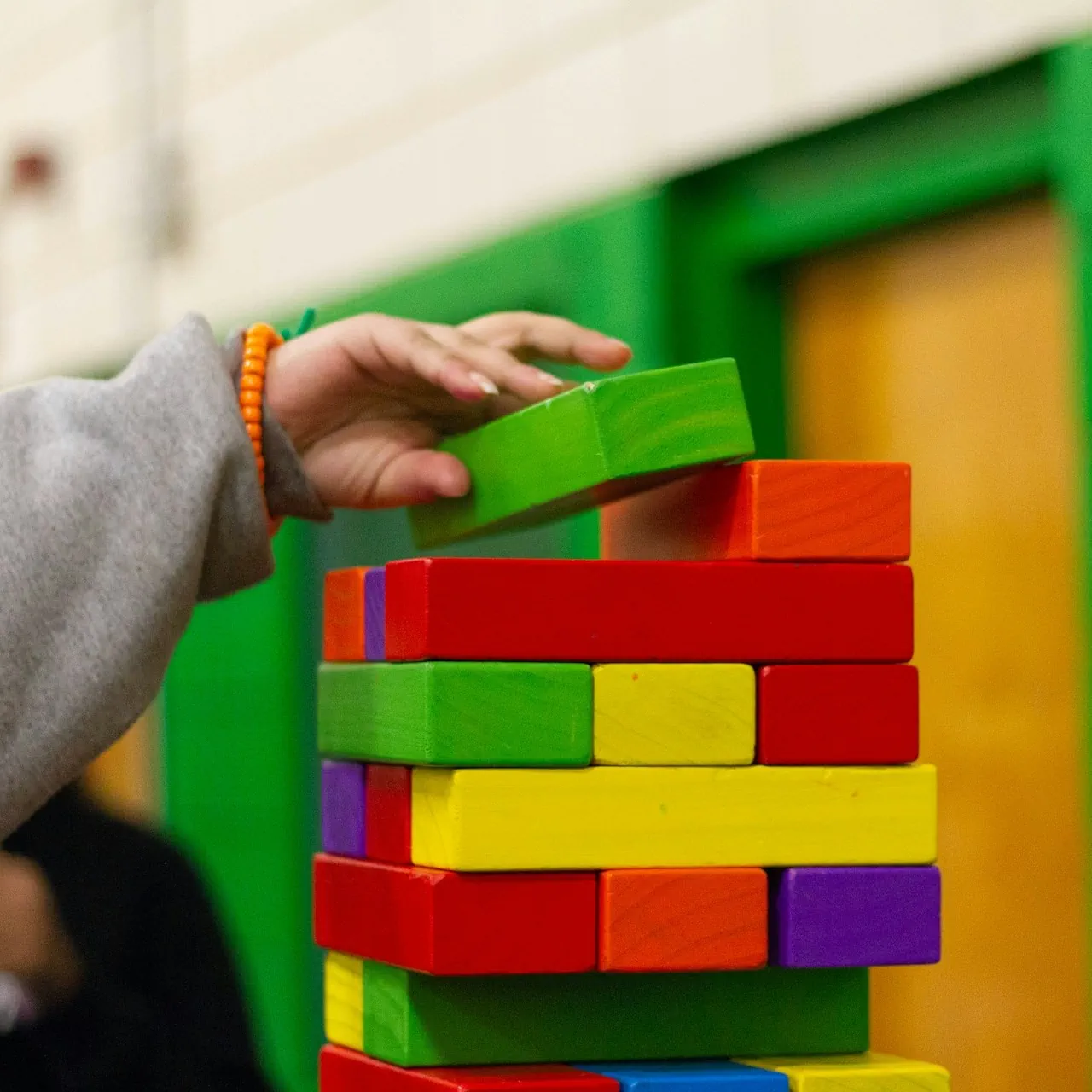
In our last post we talked about how to lay a solid foundation for your child’s mathematical education. In this post we are going to look at how to build a structure that lasts for life on that foundation.
In The Surprising Truth Behind Math Phobia, we learned that what most people call maths is actually only one branch of mathematics which is called arithmetic. Arithmetic, we also learned, is a fancy Greek word that means “the art of counting.” So, those early simple counting lessons really do make up the entire foundation of what most people call maths. Now for that foundation to be rock solid and for the superstructure that is to be built on it to be sound, you must follow one very important principle: never, ever expect your child to take a new step until the previous one is thoroughly mastered. Not once. This is where most classrooms and many programs fail.
That does not mean your child needs to be able to count to a trillion before they can begin addition but it does mean that they need to be pretty good at counting out five to ten objects before you start introducing the concept of addition. And most importantly, they should continue practicing, and expanding their counting skills while they learn the elements of addition.
Once the basic idea of addition makes sense to the child, they can start learning about subtraction. Again, they should continue to practice, and expand both their counting ability and their addition skills while learning about subtraction. If you do it carefully, a year 1 kid can also be taught the relationship between addition and subtraction. This not only makes learning the number facts a whole lot easier, it also lays the foundations for algebraic thinking.
Algebra is another branch of mathematics that we begin teaching formally in high school. It’s vital for university-bound kids who plan on going into science, engineering or economic fields. While most of the general population have no everyday use for algebra, its study develops abstract, logical and critical thinking skills like nothing else can. So these early foundations can bare life-changing, and perhaps even world-changing, fruit.
From addition and subtraction, the next step up the ladder of mathematical progress is multiplication. Multiplication is simply repeated addition. To put it another way, the multiplication table gives us “short cuts” for adding lots of numbers together. Kids love short-cuts (especially when it comes to “school” work) so this is a good way to teach the concept. If the counting skills have been properly practiced and developed, the child should have been practicing skip counting before the multiplication tables are introduced. This lays a fantastic foundation and makes learning the tables all that much easier. Since multiplication is repeated addition, the child will naturally be practicing their addition and counting skills while they are learning about multiplication, however, it is absolutely vital that every key skill that the child has learned thus far is kept fresh as the child moves forward.
This ladder of progress continues on through division to fractions and percentage to algebra, trigonometry, advanced geometry and finally to calculus. If the fundamental idea of never taking an advance step before the current one is mastered is followed consistently, the child is bound to move from success to success.
Teaching for mastery
What does it mean for a step to be mastered? Basically, the child should be able to perform the target skill relatively effortlessly. Failing to achieve this level of mastery at any step is the major cause of most math phobia and virtually every student who has sought my tutoring services for maths has not mastered one of the fundamental basics.
Many teachers and textbooks spend a lot of time teaching kids various strategies, algorithms and methods while never really giving them enough practice actually doing the maths. By “doing” I mean putting the ideas they have learned into practice. When the child is first learning to count, they should count EVERYTHING, just like the baby repeats their first word non-stop for days or even weeks before they learn to produce new words.
When the child learns the idea that addition is about combining groups of objects they should be shown how this happens in everyday contexts as often as possible. And when they are shown (or, better yet, lead to discover) that there is a definite, and fixed, answer to the problem “5 + 4” they should be given ample practice until the answer becomes almost as automatic as the answer to the question, “What is your name?” I like to tell my students that I want them to learn their tables so well that when they are old and can’t remember what they did 2 mins ago, they will still remember their tables!
But this is not your regular, or old fashioned, “drill and kill”. Notice that I have spent most of this post explaining the child needs to understand what addition IS before they start learning their addition tables. Indeed, I never expect a child to just learn any table by rote. I give them strategies that they can fall back on if they should forget the odd relationship and only then do they learn the facts through plenty of practice. It’s a fact that most kids love to do what they find easy. So, once the kid has been given the tools to make this practice easy, it’s a low stress affair that rarely, if ever, elicits a fuss. For me, it is usually just a simple 2 min drill sheet which is the quickest and most fuss free solution for a busy homeschool. But just for fun, it can also be in the form of a game, puzzle or any other device that takes your fancy to make it even more engaging.
I know that this “old meets new” approach works because I’ve seen it in countless students. One of my students once summarised my approach like this: “My teachers teach me about maths, you teach me to do maths.”
In future articles we will explore how to teach some of the key mathematical skills we’ve mentioned above in more detail.
If you’d like your kids to learn how to do maths rather than just about maths, check out Milestone Maths today.