
Reimagining Maths Teaching Part 1
I have a very simple teaching philosophy which also happens to be my advice to new or overwhelmed homeschoolers:
Do what works!
After decades of teaching and observing children learn maths, there’s one thing I know definitely does NOT work: teaching mathematics as a collection of rote procedures.
Yet much mathematics education still does exactly that. For every new type of problem a new procedure is introduced:
- Carry a ten for addition
- Borrow a ten for subtraction
- Add a zero for “long” multiplication
- Bring down a number for long division
- Invert and multiply to divide fractions
- Etc. etc. etc.
It’s dizzying just reading that list! Imagine being a nine or ten year old trying to remember when to use what procedure.
While all of those procedures are perfectly valid ways to approach their respective problems, teaching them without reference to the underlying structure of the numbers and operations involved is a recipe for creating a child who:
- Believes maths is just a collection of rules to be blindly followed; or
- Cannot apply their skills to unfamiliar problems; or
- Decides that maths is too hard; or (worst of all)
- Decides that they are just plain “dumb”
Many educators have realised this and the buzzword for maths education today is “number sense.”
The observation is that children who are good at maths seem to have an innate “number sense” that allows them to view and manipulate numbers in flexible ways. Calculations appear easy for them, and they often seem to manage without relying heavily on traditional algorithms.
The belief is that if we teach young kids to have number sense, then all of them will be good at maths. This is prima facie true but there’s a catch: number sense is not something you can teach directly.
So, instead, the modern classroom (and most modern curriculums) teach “strategies”. They explicitly teach some of the strategies that the kids who are “good at maths” apply. Notice I said “some” because in reality there’s probably literally millions of them since every such kid will have their own “bag of tricks” and many times they will be inventing the strategy “on the fly.”
So to translate this into something that a teacher, who may not have deep mathematical understanding themselves, can actually teach, a small number of strategies is explicitly taught. Often each strategy can only be applied to a particular problem type.
One example is the “make a ten” strategy. This is often taught as a way to add nine to any number. The idea is that we take one away from the other number to turn the nine into a ten. Then the sum becomes a “plus ten” which is supposed to be easier. For a child who has a good handle on counting and a number chart like the one below, it probably is. But for a child who doesn’t, the two sums are equally difficult.
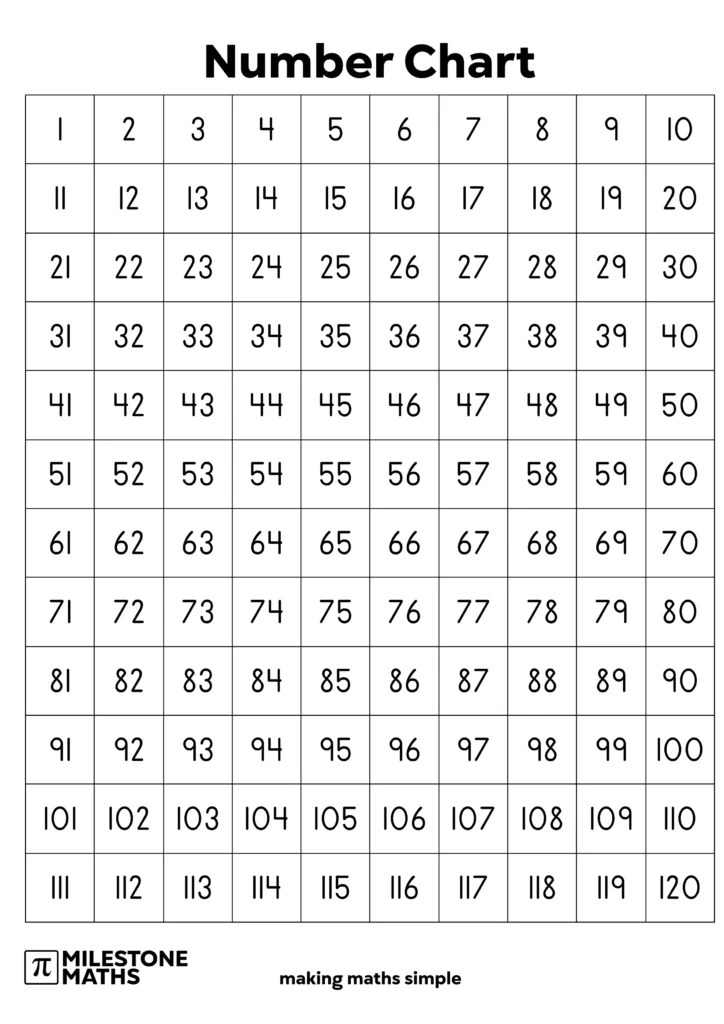
A number chart like this is a surprisingly powerful tool. It reveals the structure of our number system in a way that’s very hard to see otherwise — but only if a child knows how to use it. (You can download a copy of the chart by clicking the image.)
The make ten strategy is actually very powerful and can be applied to more than just “plus nine” problems but this only becomes obvious to a child who has good number sense.
I have seen the results of strategy based teaching myself. A child will see one addition problem and excitedly say, “I have a strategy for that!” but then you ask them to solve another with different numbers and they’ll be totally clueless. Or ask them what adding numbers together actually means and they have no idea. And the really telling diagnostic: give them the exact same problem they CAN do, but as a word problem that doesn’t contain a keyword like “all together” and suddenly they have no idea what to do.
So the question then becomes: is it possible to develop number sense or is it just a talent you must be born with?
I believe that it IS possible for everyone to develop some number sense but it is not by teaching rules or procedures. Giving a kid a bunch of random “tricks” is of no more practical value than giving them a bunch of seemingly unrelated rules and algorithms.
But if number sense can’t be taught directly and teaching strategies on their own does not work, how do we help kids develop it?
Something deeper is required.
The real challenge is helping children see the underlying structure of numbers — the patterns and relationships that make sense of mathematics.
It really isn’t rocket science but it does look very different from the way maths is usually taught in both modern and traditional classrooms.
In the next post we’ll look at why.
Next week: Why Number Sense Is So Hard to Teach.